
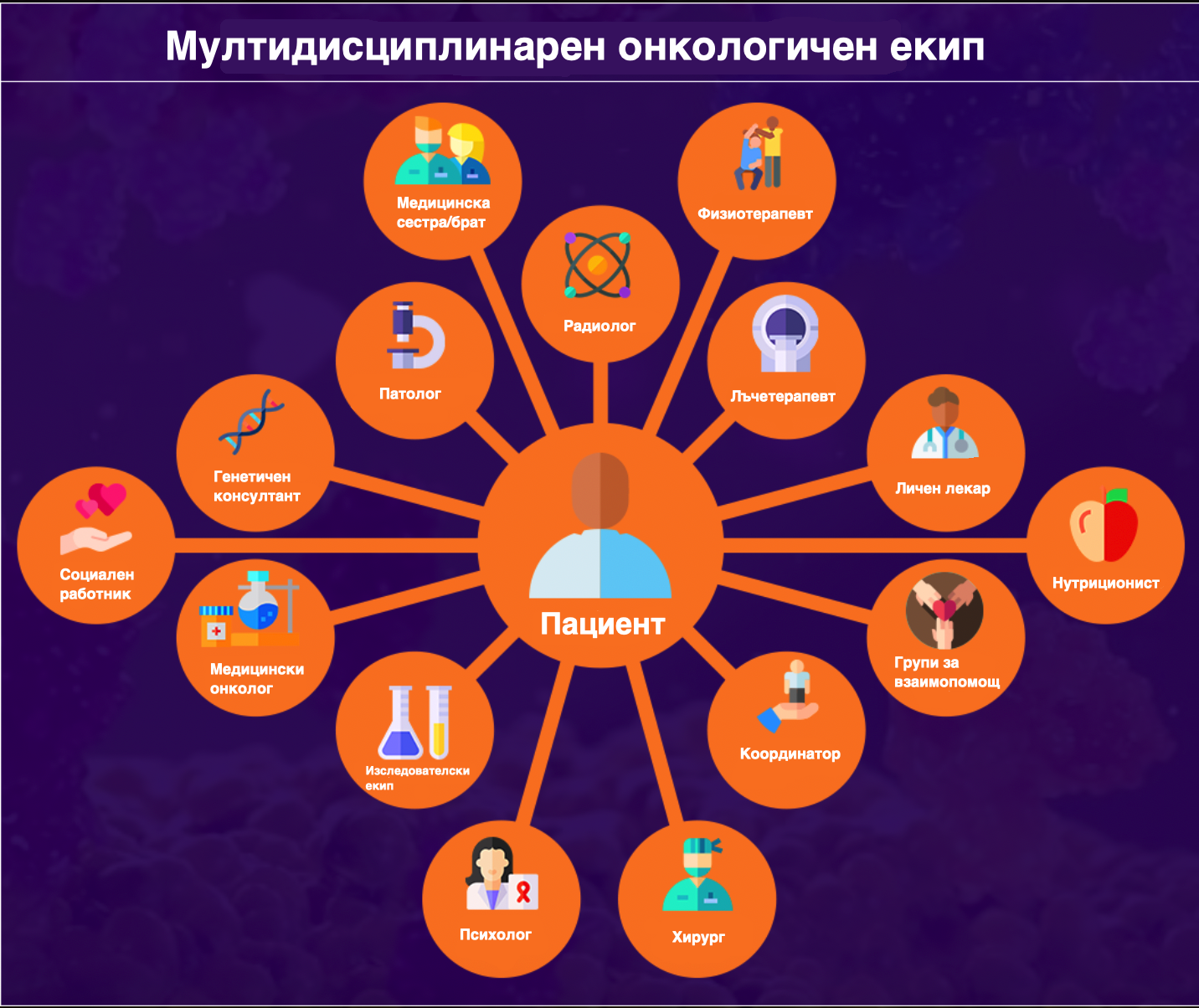
The patient pathway in a multidisciplinary team (MDT) for breast cancer is a methodologically structured process that ensures that each stage of care - from diagnosis to follow-up - is planned collectively by a group of specialists.
1. Stages of the patient pathway:
- Diagnostic stage (Triple assessment): The first step includes clinical examination, imaging (mammography/ultrasound or other imaging modalities) and biopsy.
- Initial discussion in the MDE: Prior to initiating treatment, the team reviews the results of the histopathological analysis and imaging to determine the stage and biological subtype of the tumor.
- Treatment planning: Depending on the case, the team decides whether to assign neoadjuvant therapy (before surgery), surgical intervention or direct systemic treatment.
- Postoperative review: After surgery, the MDE discusses the final pathology report to plan next steps such as radiation, chemotherapy or hormone therapy.
- Survival and follow-up: Standard recommendations for long-term follow-up and supportive care to prevent relapse are followed.
2. Key actors in the MEA:
The team usually includes a core of specialists and support staff:
- Core: Breast surgeon, oncologist (medical and radiation), pathologist and radiologist.
- Specialist Nurse: Patient's primary point of contact who coordinates care and provides emotional support.
- Extended team: Plastic surgeons, geneticists, psychologists, physiotherapists and nutritionists
3. Advantages of the multidisciplinary approach:
- Better results: Studies have shown higher accuracy in diagnosis and better survival rates.
- Coordinated Care: Reduces the time between treatment stages (e.g. from biopsy to surgery).
- Shared decision-making: The patient is informed about all the options and is involved in choosing his or her therapeutic path.